

Should you create for yourself?
Watchlist, great quotes, other things worth sharing


One of my favourite newsletters to read is Trung Phan’s. He always discusses something interesting, and thought-provoking (although most of his work is often too long to read as released).
Today, I read his latest entry, which was ‘Write for Yourself’.

As usual with Phan, he explored the arguments for and against writing for self as opposed to writing for an audience, explaining that the real challenge in choosing for or against (he’s on the Writing for Self side by the way) is dependent on the goals of the author or the creator in question.
But my favourite part of the newsletter is when he exposes the real issue with such debates. People who cite the success of artists who made honest, deliberate art for themselves alone, understate that those artists were by and large not celebrated in their lifetimes. Either that or the works they are now revered for, were unnoticed or severely underrated while they lived. Some of them died poor, miserable, and wretched. And others, simply undiscovered.
I like to call it:
“They won’t love you while you’re flesh and bone.
They wait till you’re marble and stone”.
The newsletter recounts it best:
William Shakespeare’s fame ebbed and flowed during his life. According to Douglas Hall, tributes to Shakespeare only appeared in the “years immediately after his death” and “throughout the following century Shakespeare was largely discredited and it was not until the closing years of the eighteenth century — almost 180 years after his death — that Shakespeare’s reputation was restored and his works began to enjoy the popularity they enjoy today.”
Emily Dickinson lived an insular life and only published a few dozen of her poems during her lifetime. After she died in 1886 — at the age of 55 — her younger sister discovered 1,800 of her poems. Dickinson’s family published and popularized her works.
Vincent Van Gogh only sold one painting during his life. After Vincent died from a self-inflicted gunshot wound, his brother Theo was dedicated to raising awareness of his works but died 6 months after Vincent did. It was left to Theo’s widow Jo van Gogh-Bonger to market, display and sell Vincent’s work. Her relentless efforts turned Vincent into a global art celebrity.
Leonardo da Vinci’s Mona Lisa was painted in 1503. For centuries, it was not considered his best work nor was it a top painting in Europe. The portrait was introduced to the Louvre in 1804, and cultural critics began to take it seriously in the 1850s. However, it wouldn’t be until the 1910s that the artwork became what it is today: the most famous painting in the world.
Robert Johnson was an American blues singer in the 1920s and 1930s. He recorded less than 30 songs in his lifetime and had a cult following in the Mississippi region. He died at 27 years old in 1938 and it wasn't until the 1960s when his work became prominent again. During that decade, major acts including Bob Dylan, Keith Richards, and Robert Plant credited Johnson as a key influence.
— Excerpt from Trung Phan’s Write for Yourself newsletter entry
Pair this knowledge with the fact that most people in the world today have never lived in a time where their only sources of information on other people’s wants and desires were a newspaper, an intimate conversation, or a healthy gossip session, and it’s not hard to see why we often choose to write for audiences over self.
Meanwhile, in case you’re not sure by now, I am militantly pro creating-for-self. To me, it is the only way to make real things. Of course, commercial value is important, but I only see it as something you figure out only after the first part of the equation is complete.
Also, creating for others has its dangers.
“Another reason to put yourself before the audience is because it is too easy to give feedback in the social media age. Thousands of strangers will happily praise or shit on your work after only looking at it for 5 seconds,” Trung Phan writes.
And it’s true. It makes sense that some of the greatest artists/artworks of all time were not given their fair due at the time they existed/were crafted. Once upon a time, people didn’t have blogs, newspapers, and magazines. It was a lot more difficult to get worldwide publishing, let alone worldwide feedback. We existed in tiny bubbles.
One reader of Sari Azout’s The Sublime Newsletter put it this way:
Only decades ago, the average person had one source of information, if any — the local newspaper. It’d take an hour, tops, out of their day. 1 hour out of 16 waking hours, or 6%. The rest of the day was spent making, creating value, conversing with others — 94%. Desires were simple — work for food and housing and a way to get around, find love, raise kids, build something great, fight for justice for your peers, see the world. Today, the average American spends 8 hours a day consuming digital media. 50% of our waking hours. What happens to the world when people spend half their time watching other people? When their thoughts of themselves and of the world and their desires are now shaped by taking in other’s experiences 50% of the time, up from living their own lives for 94% of their time? I think that’s an enormous question that anyone building a software product should ask themselves.
Trung Phan also mentions the problem with a digital audience:
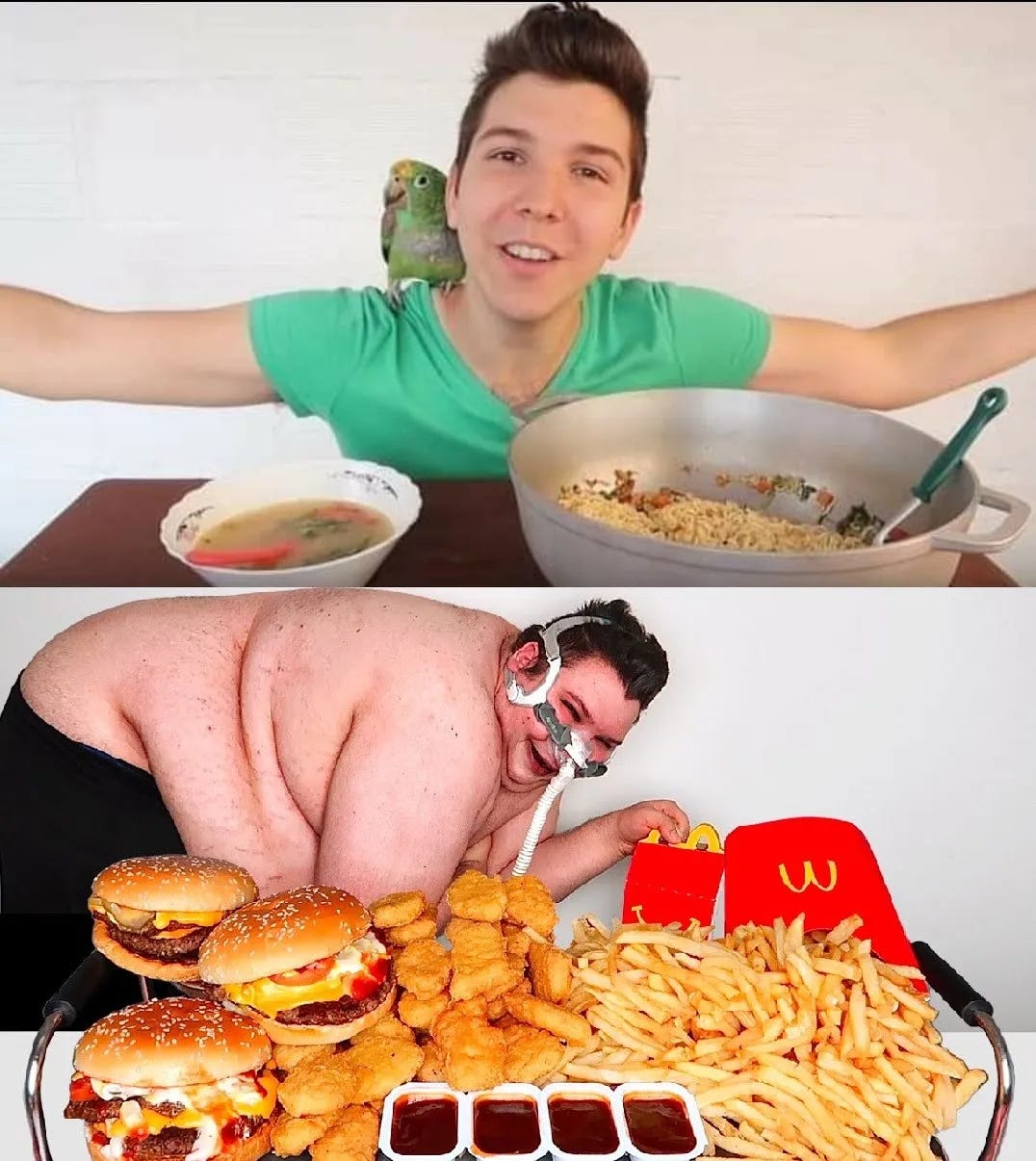
A digital audience is also having its taste filtered through powerful engagement algorithms, that target our lizard brains (violence, sex) with instant gratification, leaving no room for nuanced and meditative takes. The worst outcome down this path is “audience capture”, where online influencers lose their minds — in one famous case: becoming obese — trying to get engagement by pleasing the algorithm Gods.
If you’re wondering which influencer he’s referring to, that would be Nicholas Perry, a vegan violinist who, after realising a new faster-moving ‘niche’ on YouTube, became extremely overweight due to his focus on creating content where he performed outrageous eating challenges for his audience.
I guess the whole point of today’s newsletter is to provide some food for thought (no pun intended. I swear).
I believe in seeing my work as a form of offering to others. Rick Rubin calls art “an offering to God”. But this does not always mean that the audience is right.
After all, they don’t ever seem to be until you’re marble and stone.
Nine things worth sharing this week
Started my week getting hooked on this new track: May Ninth by Khruangbin. I loved the music video too. Check it out here:
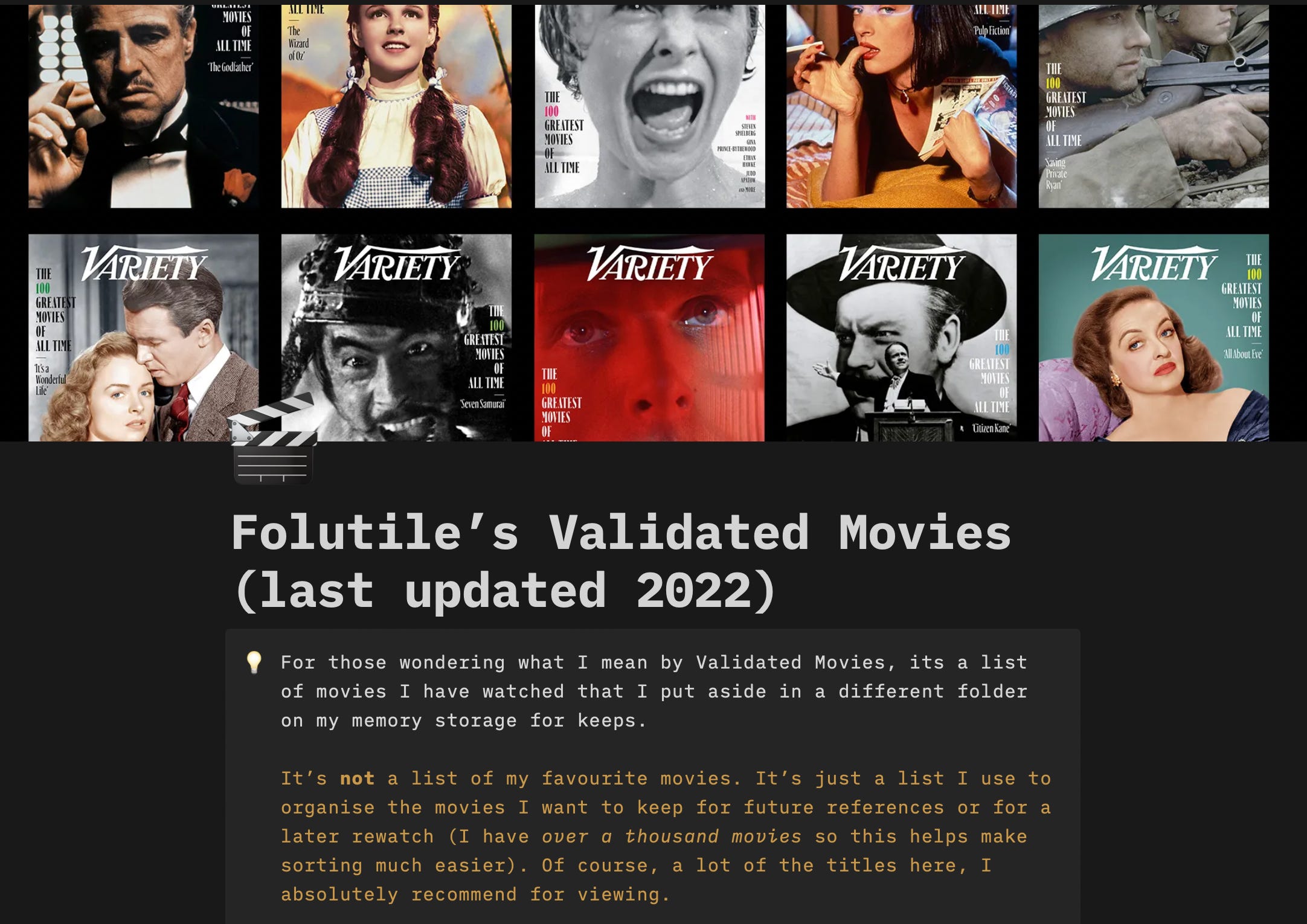
Shared my validated movies list with a friend earlier this week and then I thought, you know what, why not make it public? (You know, as we normies do 🥴).
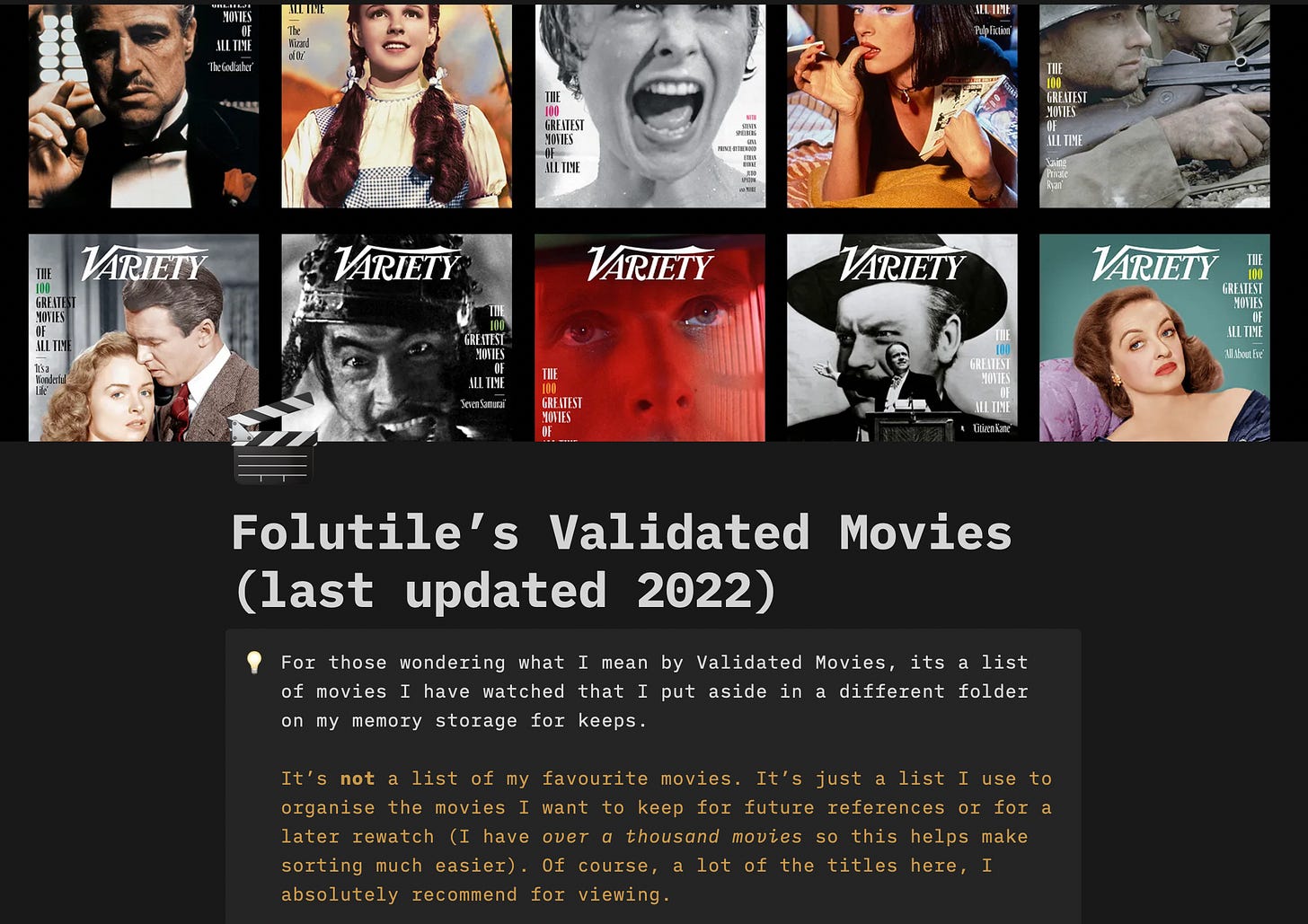
For those wondering what I mean by Validated Movies, I explain on the site.
Check it out here.Jesusegun Alagbe, a freelance journalist based in Lagos Nigeria, wrote about how Bolt’s drive-to-win insurance scheme is putting drivers’ lives at risk.
Check out the latest Growth.Design case study. This time, they are exploring 9 Ways To Boost SaaS Revenues With A Better Upgrade UX (the subject focus is Zapier, a company that provides integrations for web applications for use in automated workflows).
I read Dan Koe’s latest newsletter where he talked about the power of taking long walks.
WWDC (Apple’s Developers Conference) is kicking off tomorrow, but I’m waiting in front of the screen already to see it all happen. For newcomers, this is where they announce the latest software releases and updates to their services.
I’m currently watching Will Smith’s interview (alongside Martin Lawrence) on the 7 PM in Brooklyn with Carmelo Anthony & Kid Mero podcast. Smith and Lawrence are currently on their press run for their latest movie, Bad Boys 4. But Will shares some timeless knowledge on how to approach work and life.
This week, I’m planning on subscribing to Crunchyroll to check out what all the fuss is about with this Attack on Titans thing.
Reading "Hoarders” by Scott Galloway later today. But I know it is going to be very informative anyway.
I think in a world where the question of distribution and reach has essentially been solved, we have more of an incentive to create for ourselves. But because of social scale, we are pressured into creating for an audience.
PS: Attack on Titans is legit. I never finished it but the three seasons I watched were intense.
The audience isn't right. If they think they are, they should probably try creating.
PS: Attack on Titans stressed me. I haven't completed it either.