

Scientific proof that negativity sabotages your life
I mean, as far as psychology is concerned

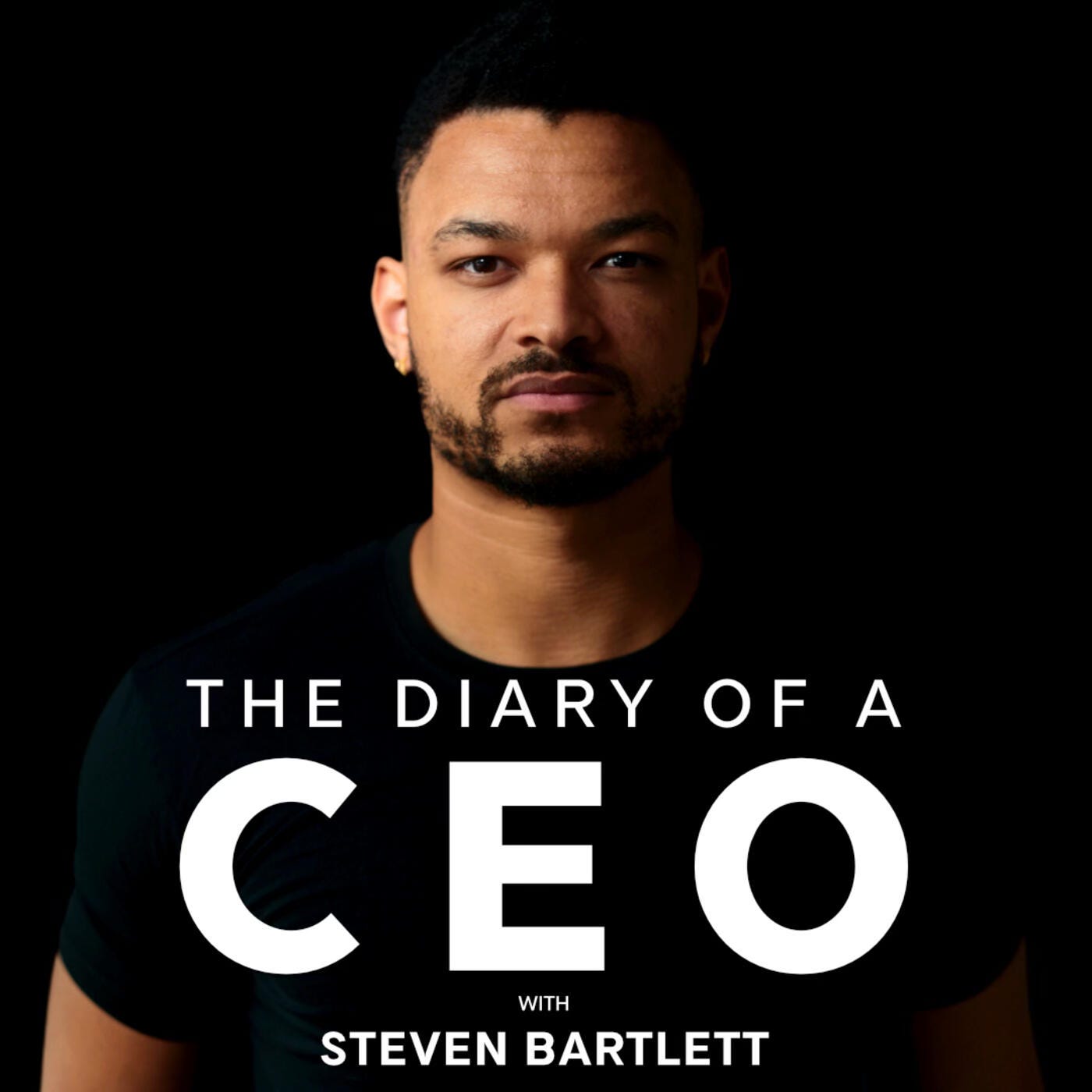
About a year ago from today (December 11, 2024 to be precise), I saw this episode of the Dairy of a CEO. In the episode, host Steven Bartlett discusses with Van Edwards, a human behaviorist who has dedicated her life conducting original research experiments on popular psychology and communication.
I remember when and where I was when I saw this episode because I wrote down a bit of it she shared back then and I’ve thought about it at least once a month for the last year or so. And now I’m sharing it ahead of a new year not only as a note to myself but as a means to help anyone still trying to decide the kind of individual they want to be going into 2026.
Van Edwards, a behavioral scientist, based on her studies and research, preaches the gospel of personal narrative. Personal narrative is the story you tell yourself about yourself. Van Edwards believes that there are three distinct personal narratives that people have.
The hero narrative,
The healer narrative,
and the victim narrative.
According to her, people who have a hero narrative concerning themselves tend to always tell their stories about their lives according to arcs of victory—they were confronted with a problem, struggled with it, but used their smarts and grit to conquer it. That’s their story concerning life, love, and everything else.
People who have a healer narrative about themselves always have the idea or perspective about themselves of their ability to help other people grow. They are usually in careers of service to others. Their story is always about putting other people’s needs above their own; a blessing and a curse. They tend to be people pleasers, say yes to everything, and overwhelm themselves.
The victim narrative, the last one, is the one where the person believes that they never overcome challenges. They always fall short. No matter how hard they work or how smart they are.
But that’s not even the interesting part of everything yet.
Van Edwards goes on to say that a question she asks people to help them uncover their personal narratives, is “do you feel lucky?”
“People who have a resounding ‘yes’ to that question are more likely heroes or healers. People who say ‘I don’t feel lucky’ are typically victims”, she said.
Then Van Edwards told a very intriguing story.
Once, Dr. Richard Wiseman, a psychologist and professor at the University of Hertfordshire, did a study by asking participants to perceive their own luck.
Then he introduced each participant to a challenge; he gave them a newspaper and told them to count the number of images in the newspaper.
But there was a trick.
On the second page of the newspaper, in big print was written:
“STOP COUNTING, THERE ARE 42 IMAGES IN THIS NEWSPAPER”.
Almost all of the people who perceive themselves as lucky saw the Ad, closed the paper and gave it back, saying that there were forty-two images.
Almost none of the ‘unlucky’ people did.
They missed the ad, kept counting and made a lot of mistakes as a result.
“This means,” Van Edwards said, “that if you think of yourself as lucky you literally see more opportunities. If you see yourself as unlucky, you miss them”.
Now, I personally find psychological experiments like this to not be impervious to fallacy or bias, and as such, do not tend to see them as hard science. There’s also the tendency of pop psychology to want to arrange everything in cute, neat boxes, ergo the three distinct personal narratives mentioned here.
But I do have experience with this on a personal level.
Whenever I go into an opportunity reminding myself of all the times I have faced similar challenges and succeeded, I give myself a better chance at figuring it out. I have found that I am perhaps 0-100 when it comes to opportunities that I did not in fact believe I could do a good job at executing.
I think that this personal anecdote mattered deeply to how well that resonated with me. So I spent much of 2025 asking myself, “What are you saying to yourself about yourself?”
I have since found that it has probably been the most important question I asked myself in the last 375 days that have passed since December 11, 2024. While I would not say I had the victim narrative for my own life at the time, I do see how this question helped me improve my personal narrative and start a journey towards thinking of myself in a more empowered way.
In 2026, I intend to continue the streak of seeing myself as a hero in my own story, and doing the work to maintain that personal narrative against all odds.
I hope you can do the same for yourself.
My toxic trait is thinking I’m a healing hero, I probably am 😐
it's interesting that I couldn't at first reconcile myself as the hero narrative when I read the three precepts, but it's the one that makes the most sense
guess I will work more on embracing that from now on
the newspaper experiment is a good one