

On artificial intelligence,
an essay

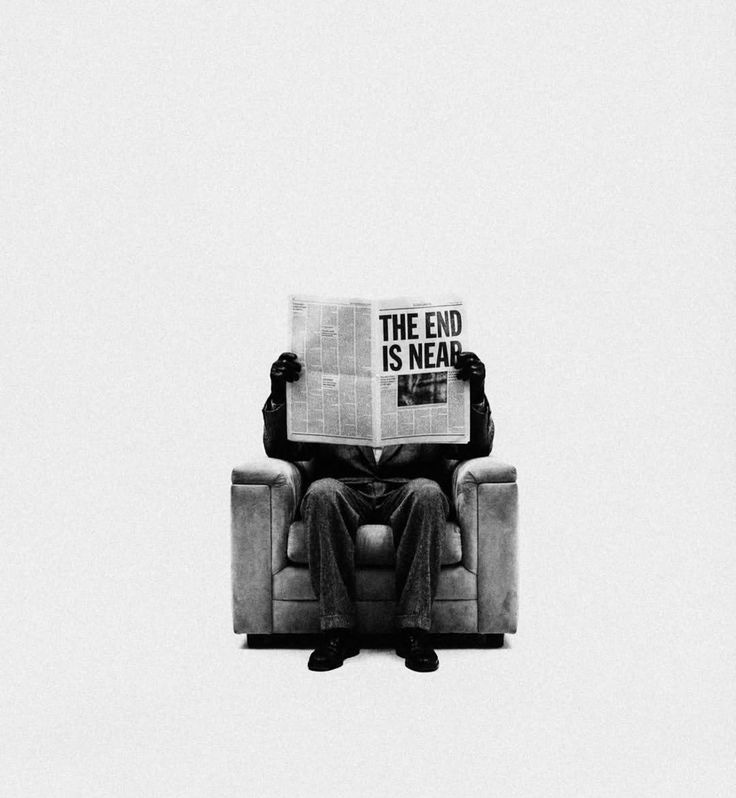
November 2022 was for many the sobering moment our realities tumbled into the redefinitions of truth.
At first, it was only the writers, and soon, it was the photographers. Shortly after, developers, sound designers, and even more recently, filmmakers, have been exposed to the extent of idolatry that artificial intelligence has spewed into our godless world.
In the three short years since the launch of mainstream generative AI, we have witnessed hot takes, ‘art,’ and social campaigns ranging from the inconceivably stupid to the frankly terrifying.
But, not to be fooled. As with all great paradigm shifts involving human society, the most important fulcrum on which discourse rests has not been the fake computer-generated people, but the real ones. Both in adoption and rejection.
For adoption, there is an interesting dynamic.
On the one hand, there are those who presumably, for feeling left out due to their self-assumed inability to create “good” art, have slowly festered in their bitterness, believing over time that artists often strut with an air of superiority in this respect: They are important, and the rest of us, not.
These are bruised egos.
They wish to “put the artist in their place” and show that there is nothing essentially special about producing art. Which brings us to the other type of adopter—the art denier, or even just ignorer. To this set of people, art isn’t a real thing. It’s, at best, a simpleton invention that has run its course, and at worst, the last stronghold of those lazy bastards in society who couldn’t compete with the rest of us productive cats.
“Taping a banana to the wall is art now? C’mon!”
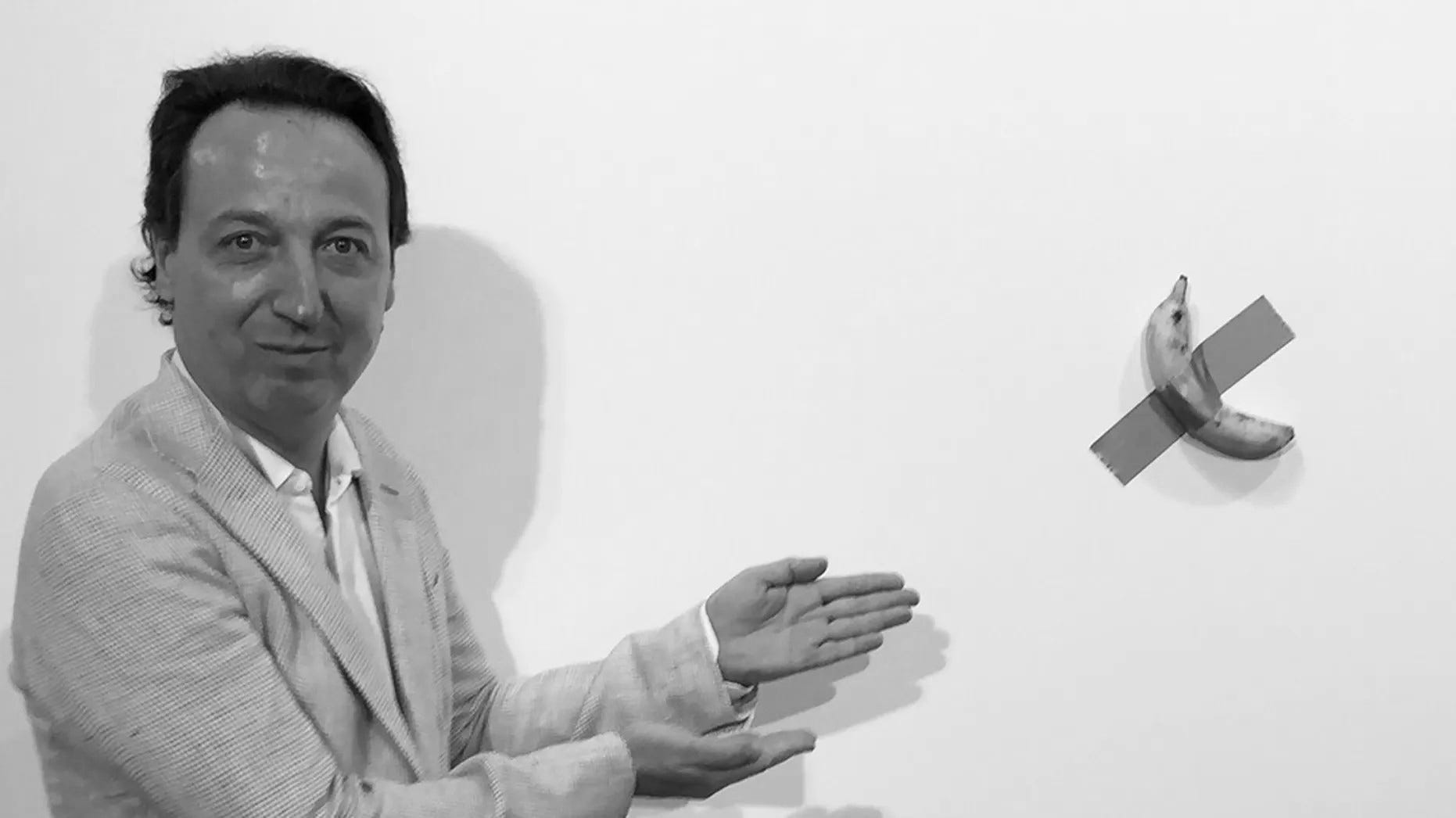
But anyone who’s gazed the beauty of the Sistine Chapel’s ceiling or admired the natural-occurring curls of their dog’s fur knows that this isn’t true. Art, and the perception or appreciation of beauty, is an essence that undoubtedly exists, irrespective of how difficult it is to define.
Meanwhile, on the end of the spectrum, we have the rejectors, predominantly artists themselves. To these guys, AI is the devil. And how ironic it is for the nonconformists to not side with him this time.
Rejectors—and all who consider themselves benefactors or appreciators of true artistic revelation—consider it sacrilegious for a computer to spit out forgeries developed by the stolen works of true talents and fed to a potted plant to teach it how to bark.
Yet, here I stand in the middle, writing this article and dictating some portions of it to my computer as it types it out for me using speech recognition because my fingers are too sore from all this carrying I’m doing for essayists right now.
Evidently, it’s hard to be against artificial intelligence myself. As would it be for any modern artist of any repute—many of the features we use in rotoscoping, keying, auto-selection, and more are rooted in machine learning concepts, which are the bedrock of artificial intelligence. Yesterday I was searching for photos of my dog that died many years ago, and instead of thumb-scrolling haphazardly like a cocaine addict looking for his dealer’s number, I simply typed the word, ‘Dog’.
I’m a Luddite by no means.
I used OCR to digitize my notes from many years ago and render them searchable. I built an app that uses AI to search my notes semantically, essentially enabling me to ask my archive of writings questions about themselves instead of trying to remember keywords to find an article I wrote four years ago.
And as a filmmaker myself, I enjoy the benefit of computer-generated imagery (sorry, 2001: A Space Odyssey). To be frank, if every time we needed to watch a movie about the Titanic, they had to sink the actual thing, theatre tickets would cost a kidney.
But that’s not the artificial intelligence that scares you. I know that.
Contrary to popular opinion, artists aren’t stupid. We know AI is in every video editing software, image manipulating app, and audio recording tool from the last decade or so. We aren’t talking about the stuff that helps us read faster or find files quicker or shaves 46 minutes off the 12 hours you used to create an illustrative poster.
We are talking about the AI that writes. Sings. And talks, and fucking draws now.
The kind that holds a camera and invents actors, a script, a cinematographer, and a scene composer.
Those monstrosities.
But the real problem with artificial intelligence for me is everything that came before it. The world we created that allowed, or even necessitates, its existence.
The Theory of
‘Natural Conclusion’.
I had a discussion with a friend and fellow artist, and we were talking about the use of artificial intelligence. We were both working writers employed in writers’ rooms. He was of the opinion that there was no problem submitting AI-assisted work for some scripts he was working on at the time. Note that some of these commissioned works, by the way, are for web series, television shows, and ‘products’ that were written for consumption of people who would have little to no awareness, if any at all, about the use of artificial intelligence in completing or developing these works.
Sincerely, I myself was getting convinced that using AI to develop such projects might not be so problematic after all. We were both severely underpaid, overworked, and each required to churn out episodes at an inhumane pace.
However, a few moments later, we were having a different conversation.
This time, about something personal that he was working on.
It was a passion project of sorts, and I could tell how deeply he cared about it when he was talking, which prompted me to ask, “Are you using any AI on this?”, to which he responded with a resounding “No”.
Both our eyes widened as we made a synchronous, staggering realization:
Artists are probably less likely to use artificial intelligence to work on any project that they consider ‘real’ art. Essentially revealing that a lot of what many artists work on in the corporate sense of day-to-day business, either for their 9-to-5 or for freelance opportunities to survive, they do not consider to be art.
And you can’t blame them. We’ve seen art used in such a pedestrian way that it doesn’t translate to us as art anymore. If you really think about it, this also explains even the labelling, “AI art”, itself.
People consider AI to be capable of art because for years, many haven’t even known what art means. Content simply developed to fill movie slates for the year and occupy the digital catalogues of streaming platforms have so pervaded our modern societies that we cannot remember what it feels like to recall the smell from a scene in a movie we saw when we were 5.
The average writer in the 21st century digital economy spends more time writing for algorithms than actual human beings, trying their best to help the organizations that employ them rank higher on search engines.
AI is ushering in an era of natural conclusion, and in a couple paragraphs, I’ll explain why.
Value captured.
A generation(al) loss(t).
I do believe that everything of value falls into one of three categories: Sentimental Value, Aesthetic Value, or Utilitarian Value.
Many other inventions of humanity, just like art, fall into all three—think the beautiful gold paperweight that has stayed in your family as an heirloom for four generations.
However, the modern 21st century human has seen art deployed in solely utilitarian ways—or only one of three possible value definitions—so often that it becomes difficult to remind them that it has any other value beyond that which they glean. That television media wasn’t simply developed to be played in the background as one does the laundry or warms up a frozen meal in the microwave. And going to the movies was intended to be far more than the skill move of a divorced father trying to get his kids to find him more interesting before they go back to their mother. It’s hard to convince a human in 2026 raised on the internet and social media that paintings aren’t just wallpapers and poems aren’t just pretty pages for Instagram or things you retweet so your crush thinks you read.
That art does have utilitarian value, but it also has sentimental value.
That it’s okay for artists to make things solely for the sake of beauty alone, or for the fulfillment of all three value categories we are exploring.
The 21st century has overexposed us to everything—kinesthetics, engineering, love—that we have no inherent respect for what it takes to create something.
A writer working professionally in our brave new world has probably experienced this more than once: exhaustingly pouring your heart out into a piece of work and being told it is unpublishable because of the audience’s attention span. Or trying to put your best foot forward in writing unconventional captions as a social media manager, and being told that it is best to stick to the basics and the things that the algorithm recognises as good, clear writing.
When you think about it this way, wasn’t this the true harbinger of the soullessness of art?
My theory is that AI art wasn’t the death of art. The commodification of art was.
Commodification required art to be scalable. Scalability required art to be replicable. Replicability required art to be predictable; robotic. And once your goal is robotic output, you can never outperform a robot. AI stops being a disruption and starts being the fulfillment of everything you were already optimizing for.
“The average person”
It’s quite unfortunate that we don’t call it as it is more often, but isn’t it truly remarkably demeaning that an ‘SEO specialist’ is literally writing for an algorithm? It’s writing something in the way that a bot can read it because search engine optimisation is, as the name implies, about trying to make your articles or writings rank higher on a search engine.
If you don’t know how that works, I can’t resist the journalistic urge to explain. Google, or any search engine, indexes web pages as search results, and to do this, they use crawlers. These tools search for specific markings and elements to ensure that the content on your site, blog post or article is in the best form to be received by what we should call, The Average Person.
This is an extremely thoughtful, useful tool, so much so that it transformed the way every single person uses the internet today—including artists—and built the very foundations for what is now a trillion-dollar enterprise with products wedged firmly in the daily timeline of nearly every online human on Earth.
The small, tiny problem?
The Average Person is fucking stupid.
That’s right.
The Average Person is a stupid Neanderthal who forgets what they’re looking at if they don’t see a subheading every 200 words and doesn’t read higher than the 10th grade level. And I can say this so authoritatively because I know something that the algorithm doesn’t know:
There’s no such thing as The Average Person.
It’s easy to forget this, but the algorithm’s understanding of the average person isn’t based on an aggregate median, or a mathematical mode. Average, in this case, is a simple, general estimate.
Essentially, it’s not like thrusting your arm into a sea of English-speaking humans and pulling out somebody, anybody, would retrieve a person that wouldn’t know how to read freaking Hemingway. Sure, they might not be remotely interested. But that doesn’t mean that they can’t.
Average, in this case, is simply the general run of things.
The ordinary, standard, typical, normal. Unexceptional.
And usually, these aren’t bad things to be.
However, the 21st century system and the industrialization era leading up to it have made a terrible habit of rendering it a pertinent—indispensable even—requirement that most things that exist to be used by many people, should be average.
Hit songs can’t be too warm, or too melancholy, or too happy or too sad. Movies can’t be too long, or too smart, or too boring or too loud. They have to exist in the middle, somewhere where every single person on planet Earth can find some purpose for it. Because that’s where the big bucks come from. The numbers. The box office records.
And, as such, the investment.
Now you’re probably wondering, “if this is true, then how can we solve this problem?”, to which I, like any snake-oil salesman, also respond with an equal wonder, “Should that be the question?”
First of all, I’ll posit that anybody who intends to solve a society’s problem on a societal level almost always ends up a sociopathic, genocidal maniac.
Take social media for example.
The Social Media Tangent.
Who really can solve the problem of social media on a societal scale? And what would be the problem they’re solving? How can we prove unequivocally that social media has been a net negative in society?
There are too many markers to monitor to determine that.
To determine the net value of social media to the quality of life of human beings, we have to isolate our considerations to specific metrics. Take for instance, happiness. In this department, it is easy to determine whether social media has been a net positive or not. For example, the 2026 edition of the World Happiness Report was nearly entirely dedicated to the effects of social media on life satisfaction. It identifies a dramatic drop in the reported quality of life among young social media users, particularly in English-speaking countries.
The report recorded that those using social media for more than seven hours a day showed a full point drop (on a 0–10 scale) in life satisfaction compared to light users. The study also confirmed that intentional “detoxes” or reductions in use lead to measurable decreases in depressive symptoms.
If because of influencer culture, timelines where we can see everyone’s thoughts and opinions, and highlight reels where we can only see the wins of others, people are sadder now than ever before in existence, then social media has been a net-negative on society in that respect.
And some people would argue that this is the only respect that matters—happiness.
But, aren’t there other important markers that determine the advancement of a society? Social media has also improved many other things. Many of us have deep friendships with people we have never physically met before, who we would have never met or experienced if not for social media. You’re living on the other end of your continent in a secluded neighborhood surrounded by people with the political and traditional ideals of a dinosaur, and you’re experiencing something you think is happening to only you. Meanwhile somebody on your instagram posts a poem dictating the exact feelings you feel and saying they feel that way too. They live all the way across the coast, in another timezone and another clime, with seemingly different realities. You wouldn’t be reading that piece of literature without the existence of sociable mediums, which is all social media really is. Interconnectedness. Community. Access. Economic viability. Entertainment. The enrichment of life. All which could even contribute to the bottomline of happiness in very evident ways.
And this isn’t merely pontification either. The same happiness report we quoted earlier mentions something interesting. Research now distinguishes between how we use social media. Platforms driven by algorithmic curation (scrolling through strangers/influencers) are strongly linked to unhappiness, whereas platforms used for direct social connection (messaging friends) show a neutral or even positive effect.
So that brings us back to the question.
If, objectively speaking, it has been observed that regulating your usage of social media can increase the quality of your life and mental health, providing the best of both worlds for yourself, what does this mean?
If a simple redirection of focus on social media and a re-evaluation of our personal habits can improve the results we get on the way it makes us feel, and what it helps us achieve, then it means that the definition and deployment matter more than the contraption itself.
It’s on this tangent that any possible proffering of a solution rests. Artificial Intelligence, for better or worse, is here to stay. And it’s not because it is humanity’s bedrock. It is because the wheels that turn which necessitated its existence have gathered more momentum than the world’s desire to stop it.
But it is eucalyptus poison. The forbidden fruit. Repulsive desire. Rolled up into anthropomorphic tools that greet you hello and goodbye.
The question of how it can be redeployed or redefined to empower the artistic vision, or the artistic mind, is frankly a question that is too vast for one simple human to answer.
See this as more an exposition of the things that be, to inform your further inquiry and understanding.
Reading this to the end, all I can say is that, you are a brilliant writer. AI is too large to unfold for now, but I would love to see how it is in 5-10 years time, and if regulations would be able to curb it's negative possibilities.